
Mandala Moon Yoga, LLC
Find Mandala Moon on social media!
  • Home
  • Yoga Teacher Training
  • YTT Application
  • YTT FAQ
  • YTT Testimonials
  • Classes & Events
  • Locations & Pricing
  • Private/Corporate Classes
  • Class Cancellations
  • Our Teachers
    • Dena
    • Deb
    • Kristin
    • Eleanor
    • Patti
    • Andrea
    • Katie
    • Julia
    • Jhana
    • Mallory
    • Veronica
  • Contact
  • Kudos
  • Affiliations/Links
  • Photo Gallery
  • Newsletter Signup
  • Blog
  • MARI Readings
  • Yoga Book Club
  • iRest Series Evaluation
  • Customized Yoga Plan Survey
  • Yoga Breaks (Video)
  • Land Acknowledgement
  • COVID

Swastikasana

7/6/2025

0 Comments

 
Picture
Swastikasana (suh-WAHS-tee-KAH-suh-nuh) is a simple cross-legged seated posture often used for meditation and pranayama practice in the Hatha Yoga tradition. The word “Swastika” comes from Sanskrit:
  • “Su” = good, well
  • “Astika” = to be, to exist
Together, “Swastika” means “auspicious,” “well-being,” or “that which is good.” In ancient India and many Eastern traditions, the Swastika is a sacred symbol of good fortune, harmony, and the eternal cycle of life.

This symbol was appropriated and misused by the Nazis in the 20th century, forever changing the way we see it. In yoga, it’s important to remember its original cultural context: an emblem of blessing and peace.

Benefits of Swastikasana
  • Supports meditation and pranayama by encouraging a tall, steady spine
  • Grounds the mind and nervous system, inviting a calm, inward focus
  • Gently opens the hips and groin
  • Promotes stability and ease for longer seated practices
  • Encourages auspicious intention, connecting you with yoga’s roots

Contraindications
Swastikasana is generally gentle, but be careful if you have:
  • Severe knee, hip, or ankle injuries
  • Significant tightness in hips that makes sitting cross-legged painful
  • Sciatica (sometimes an elevated seat or different posture is better)
  • Circulatory issues in the legs if sitting for long periods
Always listen to your body — comfort is key.

How to Practice:
  1. Sit with legs extended in Dandasana (Staff Pose).
  2. Bend your left knee, bringing the left foot in toward your groin.
  3. Bend your right knee, sliding the right foot in to tuck between the left calf and thigh — your shins cross naturally in front of each other.
  4. Ground through both sitting bones.
  5. Lengthen your spine. Draw the crown of the head upward, soften the shoulders down the back.
  6. Rest hands on your knees or in your lap, palms facing up or down.
  7. Close the eyes or soften the gaze. Stay for a few minutes, observing the breath.
Tip: Switch the cross of your legs halfway through longer practices to balance hips and knees.

Preparatory Poses & Warmups
Swastikasana can feel tight if your hips are tight or cold. Prepare with:
  • Cat/Dog Tilts and Seated Side Bends to warm the spine
  • Bound Angle Pose (Baddha Konasana) to open hips
  • Fire Log Pose (Agnistambhasana) to gently stretch deeper
  • Gentle Lunges or Lizard Pose to release hip flexors

Adaptations
Sit on a folded blanket or cushion to lift the hips above the knees — this reduces knee strain and supports the natural curve of the spine.
Place blocks or cushions under the knees if they hover high above the floor, preventing unnecessary strain.
Use a chair if sitting on the floor isn’t accessible — the key is a tall, steady spine.
Try other seated postures: If Swastikasana doesn’t feel good for your body, you might choose Sukhasana (Easy Pose) or Vajrasana (Thunderbolt Pose) instead.

​Swastikasana reminds us that our seat for meditation can be simple, humble, and powerful — an embodiment of steadiness, well-being, and our innate potential for inner peace.

May you practice with the spirit of Swasti — may your seat be a place of balance, blessing, and freedom within.
0 Comments

Metta/Loving Kindness

2/10/2025

0 Comments

 
Picture
The world might seem a little chaotic or scary sometimes, and finding moments of peace and connection can be a sanity saver. We're constantly bombarded with stimuli, leaving us feeling stressed, scattered, and disconnected from ourselves and others. But what if there was a way to cultivate inner peace, foster compassion, and deepen your connection to the world around you? There are many, but let's consider the powerful combination of Metta meditation and yoga.

These two ancient practices, originating from Buddhist and Indian traditions respectively, beautifully complement each other, offering a holistic approach to wellbeing. While yoga cultivates strength, flexibility, and balance, Metta, also known as loving-kindness meditation, cultivates mental and emotional wellbeing by fostering feelings of love, compassion, and kindness towards oneself and all beings.

What is Metta Meditation?
At its core, Metta meditation is a practice of cultivating loving-kindness. It involves silently repeating phrases of well-wishing, starting with yourself and gradually extending outward to loved ones, neutral individuals, difficult people, and eventually, all beings. These phrases often include the following or similar phrases:
  • "May I/you be well."
  • "May I/you be peaceful and at ease."
  • "May I/you be happy."
  • "May I/you be free from suffering."
​

The beauty of Metta lies in its simplicity. It's accessible to everyone, regardless of background or experience. By consistently practicing, you can gradually shift your mindset from one of judgment and negativity to one of acceptance, compassion, and love.

How Yoga Complements Metta Meditation:
While Metta meditation focuses on the inner world, yoga provides a powerful foundation. The physical postures (asanas) help to release tension, improve circulation, and create a sense of groundedness and heightened awareness. This grounded awareness makes it easier to access and cultivate the feelings of loving-kindness in Metta meditation.

Here's how the two practices intertwine:
  • Preparing the Body: Yoga asanas can prepare the body for meditation by releasing physical tension that might hinder mental focus. A gentle flow or restorative poses can create a sense of calm and openness, making it easier to settle into a meditative state.
  • Cultivating Mindfulness: Both yoga and Metta meditation are practices of mindfulness. Yoga encourages you to be present in your body, noticing sensations and breath. This heightened awareness translates beautifully into Metta meditation, allowing you to more deeply connect with the feelings of loving-kindness.
  • Extending Compassion: Just as you extend compassion to yourself in Metta meditation, yoga encourages self-care and acceptance of your body's limitations. This self-compassion can then be extended outwards to others.
  • Integrating the Practices: You can incorporate Metta phrases into your yoga practice. While holding a pose, you can silently repeat the phrases, directing loving-kindness towards yourself and others. This integration deepens the experience of both practices.

We often incorporate Metta practice into our February classes, when we are focused on heart opening, compassion, love, and devotion. 
0 Comments

Live the Actual Moment

2/27/2014

1 Comment

 
Picture
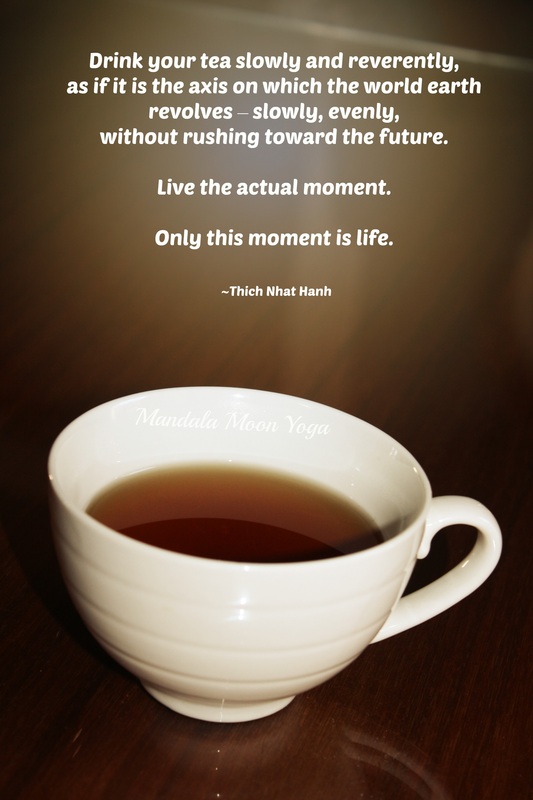
Our theme in class this week is being present.  This is one of those easier-said-than-done ideas.  Have you ever experienced eating while driving? Surfing the net while watching a movie? Texting while sharing a meal with someone? Daydreaming when someone is talking to you? If you are in a state of constant multi-tasking, are you ever truly present?  I love the quote above my cup of tea.  "Live the actual moment." 

What does this mean? Consider this. If you're eating, just eat.  Enjoy the food, taste it even, relish it, enjoy it.  Enjoy, too, the person or people sharing the meal with you.  Look at them, make eye contact, and have a conversation. Out loud, with your actual voice. When driving, just drive.  Don't eat or drink or fiddle with the music. Don't reach into the back seat.  And does it really need to be said? When you're driving, don't text or chat on your phone! Driving is kind of a big deal.  Cars are huge pieces of machinery.    

In class, we often anchor ourselves to the actual moment through a practice of breath awareness. This week, we anchored with our breath as well as mantra. The Vietnamese monk, Thich Nhat Hanh, is one of my favorite go-to guys when it comes to mindfulness and living in the moment.  I love his book, Happiness, and I borrowed one of his meditations for class this week.  The next time you are feeling distracted, try this, and let me know how it goes in the comments.

Meditation to bring yourself into the Moment

Come into easy pose or sit in a chair with your feet flat on the floor. Root down through your sitting bones and rise up tall through your spine, crown of the head pressing up toward the sky.  Roll your shoulders back and down and connect with your natural breath.  Take a minute to settle in, then add the following mantras with your breath.

Breathing in, I follow my in-breath all the way through

Breathing out, I follow my out-breath all the way through

 
Breathing in, I’m aware of my body

Breathing out, I release all the tension in my body.

 
Breathing in, I know I am breathing in.

Breathing out, I know I am breathing out.

 
As my in-breath grows deep,

My out-breath grows slow.

 
Breathing in, I calm my body,

Breathing out, I feel at ease.

 
Breathing in, I smile,

Breathing out, I release.

 
Dwelling in the present moment,

I know this is a wonderful moment.


1 Comment

    Dena D. Beratta

    Honored to teach, but always a student.

    Archives

    December 2025
    November 2025
    October 2025
    September 2025
    August 2025
    July 2025
    June 2025
    May 2025
    April 2025
    March 2025
    February 2025
    December 2024
    November 2024
    October 2024
    September 2024
    August 2024
    July 2024
    May 2024
    April 2024
    February 2024
    January 2024
    November 2023
    October 2023
    September 2023
    August 2023
    July 2023
    June 2023
    May 2023
    April 2023
    March 2023
    February 2023
    January 2023
    November 2022
    February 2022
    April 2021
    December 2016
    February 2014
    November 2013
    June 2013

    Categories

    All
    Alignment
    Apana Vayu
    Aparigraha
    Artha
    Asana (Poses)
    Autumn Equinox
    Ayurveda
    Beginner's Mind
    Benefits Of Yoga
    Be Present
    Bhagavad Gita
    Brahmacharya
    Celibacy
    Chakras
    Citta Vritti
    Cookies
    Devotion
    Dharma
    Diwali
    Earth Day
    FAQ
    Gratitude
    Half Moon
    Halloween
    Hanuman
    Kali
    Kapha Season
    Kleshas
    Koshas
    Labor Day
    Letting Go
    Lion's Breath/Pose
    Loving Kindness
    Meditation
    Memorial Day
    Metta
    Mindfulness
    Moderation
    Mothers
    Muladhara
    Niyamas
    Pancha Vayu
    Patanjali
    Polite Practice
    Pranayama
    Purusharthas
    Samhain
    Sankalpa
    Sanskrit
    Self-study
    Showing Up
    Spring
    Spring Equinox
    Stress Relief
    Summer
    Summer Solstice
    Svadhyaya
    Thich Nhat Hanh
    Tips
    Vata Season
    Weight Managmenet
    Winter Solstice
    Yamas
    Yoga Etiquette
    Yoga For Beginners
    Yoga Sutras

    RSS Feed

Call us: (315) 673-7535 or text: (315) 440-9125

Email: [email protected]